
Prostate cancer is the most common cancer in men in the UK, yet screening remains contentious. There's no national programme because the standard PSA test isn't reliable enough on its own. That doesn't mean men are without options it means the approach has evolved. The conversation now centres on risk-based testing that combines PSA with targeted MRI, multi-cancer blood work, and genetic testing. The PSA test: useful, but not definitive A PSA (prostate-specific antigen) test measures a protein produced by the prostate. Levels rise from cancer, but also from benign enlargement, infection, or even recent cycling or sexual activity — hence its reputation for false alarms. Where PSA helps: Simple, quick, low-cost blood draw Clearer role in high-risk men (family history, genetic mutations, Black ethnicity) for catching aggressive disease earlier Useful for risk stratification when combined with other information Where PSA falls short: A raised PSA doesn't confirm cancer — most raised results aren't cancer at all Misses clinically significant cancers while flagging slow-growing ones that never would've caused harm Acting on unclear results leads to unnecessary biopsies and anxiety The UK National Screening Committee has moved away from PSA testing for all men, instead recommending an informed conversation about personal risk. For men over 50, that conversation matters. For those with family history or genetic risk, it matters earlier. MRI: the game-changer in prostate diagnostics The most significant shift in prostate diagnostics over the past decade has been using MRI before biopsy, not after. Multiparametric MRI can identify suspicious areas with enough precision to spare many men an invasive biopsy entirely. Those who do need one can have it targeted directly rather than done blind. At The Private Doctors, prostate imaging sits within our Full Body MR I assessment — gender-specific pelvic imaging alongside detailed views of the brain, spine, chest, and abdomen. One appointment covers considerably more ground than a standalone scan, with zero radiation exposure. The key distinction: PSA tells you if a signal is present. MRI tells you where to look. Together, they give far more clarity than either alone. TruCheck: a different signal Where PSA and MRI target the prostate, TruCheck works differently. It's a blood-based multi-cancer test detecting circulating tumour cells across more than 70 solid organ cancers — 88% sensitivity, 96–99% specificity. TruCheck isn't a replacement for PSA or prostate MRI. It sits alongside them as a broader early-warning system, particularly valuable for men wanting reassurance across multiple cancer types rather than investigating organ by organ. For men with no specific prostate concern but general interest in proactive screening, it's often the natural starting point — with MRI or prostate-specific testing to follow if needed. BRCA: the genetic piece men rarely discuss BRCA1 and BRCA2 are known for breast and ovarian cancer risk, but both carry real implications for men — and BRCA2 is associated with meaningfully higher risk of aggressive, early-onset prostate cancer. Research from the IMPACT study presented at the European Society for Medical Oncology in 2025 found: Men with BRCA1 face more than 3× the risk of aggressive prostate cancer BRCA2 carriers face more than 2× the risk, diagnosed around five years earlier than non-carriers On this evidence, researchers are calling for annual PSA testing in BRCA1 and BRCA2 carriers from age 40 — a full decade before general screening conversations typically begin. Our Genetic Cancer Risk assessment analyses 31 clinically relevant genes (including BRCA1, BRCA2, ATM, and HOXB13) from a single saliva or blood sample, alongside genes linked to breast, bowel, pancreatic, and skin cancers. For men with family history of prostate, breast, or ovarian cancer, genetic testing should come before the broader screening conversation — because knowing your genetic risk changes when and how often other tests matter. How to approach this No single test tells the whole story. A sensible, risk-adapted approach: Family history of prostate, breast, or ovarian cancer, or Ashkenazi Jewish descent → Start with genetic testing BRCA1/BRCA2 positive, or over 40 with other risk factors → PSA testing becomes more valuable, more frequent Raised or borderline PSA, or want to avoid unnecessary biopsy → Prostate MRI to clarify next steps General preventative interest, no specific concern → TruCheck as a broad first check, with targeted follow-up if indicated The right combination — and the right frequency — depends on individual risk. That's what a proper consultation is for. Our prostate and cancer screening options Genetic Cancer Risk screening — £950 Analyses 31 clinically relevant genes for inherited cancer risk Full Body MRI (including prostate imaging) — £1,695 Structural health assessment with gender-specific pelvic imaging, zero radiation TruCheck multi-cancer blood test — £1,495 Blood-based detection across 70+ solid organ cancers Foundation/Advanced/Executive Health Assessment — from £950 Comprehensive preventative screening tailored to your risk Contact us to discuss the right combination for you. For business owners and directors If you run a limited company, prostate and cancer risk screening can be funded through the business. HMRC permits one health check-up per employee, per year, without it being treated as a benefit in kind — no personal tax liability, fully deductible for the business. This article is provided for general information and does not constitute medical advice. Screening decisions should always be made in consultation with a doctor, taking into account personal and family medical history.

This one's simple but non-negotiable - UV protection is the best anti-ageing strategy that exists.
Your nutrition should be tailored to your actual metabolism and activity level.
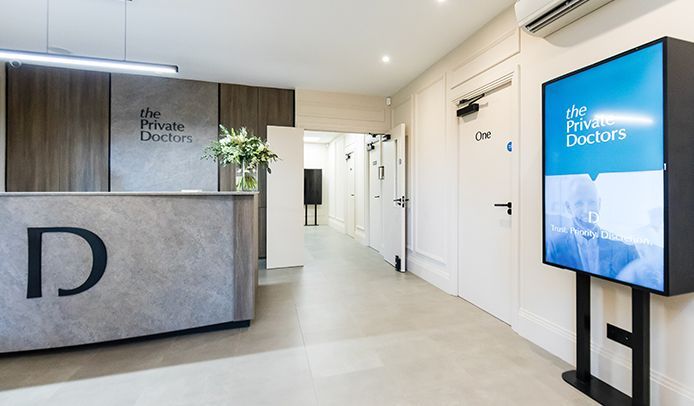
Discover why Yorkshire's business leaders are investing in executive health screening. Expert longevity medicine and preventive care in Leeds — Book today.

What is a private GP in Yorkshire? The Private Doctors offer same-day concierge GP care in Leeds, Harrogate, Ilkley and Wetherby. CQC registered. No referral needed. Book today.
What is longevity medicine and where can you access it in Yorkshire? The Private Doctors in Leeds offer expert healthspan optimisation, advanced diagnostics and preventive screening.