
Concierge Healthcare in Yorkshire: A Different Standard of Private GP Care


By The Medical Team 22/07/26

Reviewed by Dr Inderraj Chaggar MBBS (Hons) MRCGP BSc (Hons)

Clinical Director, The Private Doctors, Leeds


Most people with private health insurance believe they have access to the best care available. In many respects, they do - faster appointments, better facilities, shorter waits for diagnostics. But there is a level of healthcare above that, and it is rarely discussed openly.


It is called concierge medicine. And for a growing number of professionals, business owners, and families across Yorkshire - in Leeds, Harrogate, Ilkley, Wetherby, and beyond - it is becoming the standard they refuse to settle below.

This is not about luxury for its own sake. It is about having a doctor who actually knows you. Who is available when you need them. Who coordinates your care end to end, rather than handing you a letter and wishing you well. For people whose time is finite and whose health decisions are consequential, the difference matters enormously.


What Is a Private GP and What Is Concierge Medicine?

A private GP is a fully qualified, GMC-registered doctor who provides healthcare outside the NHS. Appointments are typically available within 24 hours, last 20 to 30 minutes, and require no referral to book. You choose your doctor, and pay directly or through private health insurance.


Concierge medicine - sometimes called concierge GP care or direct primary care - takes this further. It is a model in which you have a direct, ongoing relationship with a named senior doctor who manages your health comprehensively over time. The defining features are continuity, access, and depth: the same doctor at every appointment, available when you need them, coordinating your care end to end rather than passing you between services.

At The Private Doctors in Leeds, this is the standard as a matter of course - not an upgrade. Every patient has a named GP, appointments of at least 30 minutes, and direct access to an exclusive network of Yorkshire’s leading consultants when specialist input is required.


What Concierge Healthcare Actually Means

The term is used loosely, so it is worth being precise.

At its best, concierge healthcare is the antithesis of the fragmented, time-pressured experience that characterises even good conventional medicine. An NHS GP appointment lasts, on average, eight to ten minutes. A standard private appointment is longer, but rarely truly unhurried. A concierge consultation is built differently from the ground up - thirty minutes as standard, with the time and space to address not just the presenting concern, but your health as a whole.


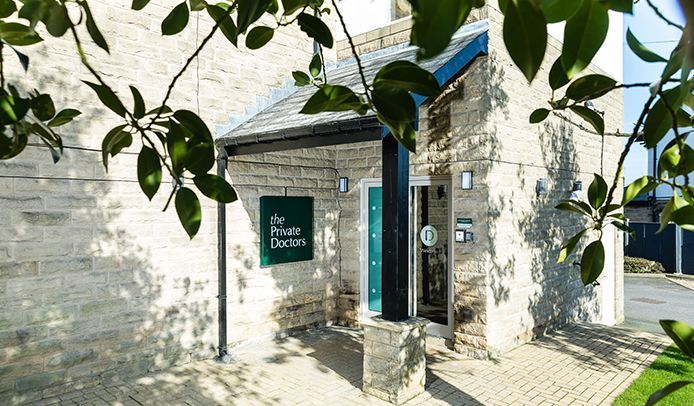
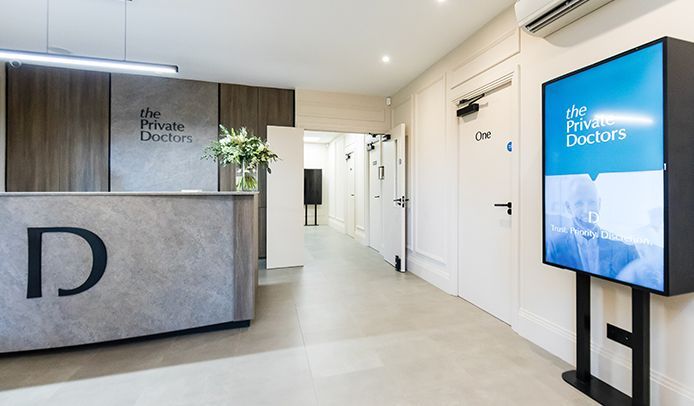
The Private Doctors offer exactly this model in Yorkshire. Every patient has access to a dedicated senior GP - male or female, according to preference - who provides continuity of care across every aspect of their health. Whether the consultation takes place at the clinic in Roundhay, North Leeds, via secure video, or at your home, office, or hotel, the standard of care remains the same.


The Problem with Conventional Private Healthcare

To understand why concierge medicine is gaining ground in Yorkshire, it helps to understand what it is replacing.

Standard private healthcare - even when accessed through a reputable insurer - is typically episodic. You develop a concern. You book an appointment. You see a doctor, possibly one you have never met before, who reviews your notes quickly and addresses your immediate issue. A referral may or may not follow. Results arrive, sometimes with explanation, sometimes without. The next appointment, if there is one, may be with an entirely different clinician.

This model is not without merit. But it has structural limitations that become apparent the moment your health situation becomes complex, time-sensitive, or simply requires someone who knows your history without having to be reminded of it.


For senior professionals and high-net-worth individuals, those limitations carry real cost - not just in health terms, but in time, in disruption, and in the stress of navigating a system that was not designed with their lives in mind. The concierge model addresses this directly.


What You Can Expect at The Private Doctors

GP appointments at The Private Doctors are structured around the patient, not the schedule. Standard consultations are thirty minutes - long enough to take a proper history, conduct a physical examination, arrange any necessary investigations, and discuss the findings. Follow-up appointments are twenty minutes, ensuring results are reviewed and a clear plan is in place.


Appointments are available early mornings, evenings, and weekends, because health concerns do not confine themselves to office hours. For those who cannot or prefer not to travel to the clinic, virtual GP consultations via secure telephone or encrypted video deliver the same level of care remotely. And for situations where attending anywhere is impractical, our doctors will come to you - at your home, your office, or your hotel - carrying out the same thorough examination they would conduct in clinic.


When diagnostic testing is required, the process is equally seamless. Blood tests covering more than 1,500 panels are available, with most results returned within twenty-four to forty-eight hours. Every investigation includes a complimentary virtual consultation to review findings - you are never handed a set of numbers without context or guidance.


Where a concern requires specialist input, The Private Doctors draw on an exclusive network of Yorkshire’s leading consultants - what we call our Black Book. Referrals are made to clinicians we know personally, not to whoever has an available slot on a booking platform. That distinction matters when the stakes are high.


Concierge Care for the Whole Family

One of the less visible but deeply valued aspects of concierge medicine is its scope. The Private Doctors care for patients across all stages of life - from newborns through to later years - meaning that a family in Harrogate or Ilkley can have one trusted practice managing the health of every family member, with full visibility across the household’s medical history.


This matters in practice. A doctor who knows that a patient’s father died of a cardiac event in his fifties will approach that patient’s cardiovascular risk very differently from one reading their notes for the first time. A doctor who has seen a child grow from infancy will notice changes in behaviour or development that might not register as significant in isolation. Continuity is not just a convenience - it is clinically relevant.


Women’s health services at The Private Doctors cover every stage of a woman’s life, from menstrual health and fertility through to menopause support and beyond. Men’s health is addressed with equal rigour - prostate health, testosterone, cardiovascular risk, and the questions that often go unasked in a standard appointment. Paediatric care, dermatology, and cardiology are all available in-house, removing the need for multiple separate referrals across different practices.


When Concierge Care Makes a Critical Difference

The value of a trusted private GP becomes most apparent not in routine appointments, but in the moments that matter most. An executive in Wetherby develops chest tightness during a period of intense work pressure. With a concierge practice, a same-day or next-day appointment is possible. The GP who answers already knows the patient’s cardiac history, their stress levels, their recent blood results. An ECG can be arranged immediately. If further investigation is warranted, a cardiologist from the network can be contacted directly, with the patient seen within days rather than weeks.


Without that relationship, the same executive faces a very different experience - a call to a GP who does not know them, a wait for an appointment, a referral letter to a hospital cardiology department, a further wait. The outcome may be the same. But the time lost, the anxiety, and the disruption are not incidental - they are the difference between a health system that works around your life and one that does not.


This is particularly relevant in the context of heart health, where early assessment of symptoms and risk factors can be genuinely consequential.


Concierge Healthcare for Yorkshire Businesses

The concierge model extends naturally into the corporate environment. For businesses in Leeds, Harrogate, and across the region, offering senior staff access to a dedicated private GP is an increasingly recognised tool for talent retention, productivity, and genuine duty of care.


Corporate healthcare packages at The Private Doctors can be structured around individual businesses, from GP appointment bundles for nominated employees through to comprehensive executive health programmes for leadership teams. On-site clinics at your workplace can be arranged, as can annual health screening days that minimise disruption to operations while demonstrating a meaningful commitment to staff wellbeing.


The return on investment is well documented. Early identification and treatment of health issues reduces absenteeism. Access to rapid, expert care reduces the time senior people spend navigating the health system. And the signal it sends - that the organisation values its people enough to invest in their health at this level - has a measurable effect on culture and retention.


Is Concierge Healthcare Right for You?

If you have ever left a medical appointment feeling that something important was not fully addressed - if you have waited weeks to be seen for a concern that turned out to be nothing, and wondered what would have happened if it had been something - then you already understand the case for a different model.


Concierge healthcare is not exclusively for the very wealthy. It is for anyone who has decided that their health deserves the same standard of management they apply to everything else they care about. A named doctor who knows them. Access when it is needed. Care that is coordinated, not fragmented. Results that are explained, not just delivered.


Whether you are based in Leeds, Harrogate, Ilkley, Skipton, or anywhere across West and North Yorkshire, The Private Doctors can provide that standard of care - at the clinic, at your home, or wherever your life takes you.

Book a private GP consultation today.

  • What is a private GP and how is it different from an NHS GP?

    A private GP is a fully qualified, GMC-registered doctor who provides healthcare outside the NHS system. The key differences are access and time. Private GP appointments are typically available within 24 hours — often the same day — and last 20 to 30 minutes rather than the NHS average of eight to ten minutes. You choose your doctor, see the same clinician consistently, and receive care that is tailored to you rather than to a list of thousands. At The Private Doctors, appointments are available in clinic, virtually, or at your home or workplace.

  • What does a private GP appointment cost in Leeds and Yorkshire?

    Private GP consultation fees in Yorkshire vary by practice and appointment type. At The Private Doctors, appointments are 30 minutes as standard. Contact our team directly for current fee information, as pricing reflects the depth and continuity of care provided. There are no hidden charges — any investigations, blood tests, or prescriptions required will be discussed with you before proceeding.

  • Can I see a private GP the same day in Leeds or Harrogate?

    Yes. The Private Doctors offer same-day and next-day appointments, including early mornings, evenings, and weekends. Our clinic is based in Roundhay, North Leeds, and is easily accessible from Harrogate, Ilkley, Wetherby, and Skipton. Virtual consultations by secure telephone or video are also available at short notice.

  • Do I need a referral to see a private GP?

    No. You can book directly without a referral from your NHS GP. This applies to GP consultations, health screening, blood tests, and most other services at The Private Doctors.

  • Is The Private Doctors CQC registered?

    Yes. The Private Doctors are a CQC-registered private medical practice, based at 1st Floor, 52 Street Lane, Leeds, LS8 2ET. CQC registration means the practice is independently inspected and verified against national standards for safety and quality of care.

  • What is concierge GP care and how does it differ from standard private healthcare?

    Concierge GP care is a model in which you have a direct, ongoing relationship with a named senior doctor who manages your health comprehensively. Unlike standard private appointments — which may involve a different clinician each visit — concierge medicine offers genuine continuity, unhurried consultations, rapid access, and end-to-end coordination of any specialist input required. At The Private Doctors, every patient has a named GP, appointments of at least 30 minutes, and access to an exclusive network of Yorkshire’s leading consultants for direct referrals.

  • Can I use private health insurance with a private GP in Yorkshire?

    Some private health insurance policies cover GP consultations and diagnostic tests — but coverage varies significantly by insurer and policy level. We recommend checking directly with your insurer before booking. The Private Doctors can provide detailed invoices and clinical summaries to support insurance claims where relevant.

  • Is a private GP available in Harrogate, Ilkley, Wetherby, and Skipton?

    Yes. While our clinic is based in Roundhay, North Leeds, The Private Doctors serve patients from across West and North Yorkshire including Harrogate, Ilkley, Wetherby, Skipton, and the surrounding areas. Home visits, office appointments, and virtual consultations are all available, meaning geography need not be a barrier to this standard of care.

  • Can my business provide private GP access to employees in Yorkshire?

    Yes. The Private Doctors work with Yorkshire businesses of all sizes to deliver corporate healthcare programmes, including GP appointment bundles for nominated staff and on-site clinic days. Employers should confirm the tax treatment with their accountant, as HMRC rules apply to employer-funded healthcare.

Health Assessments

Find out more about our preventative health checks.


Corporate Care

Find out more about how you can look after your people.

SHARE THIS

By The Medical Team August 2, 2026
Prostate cancer is the most common cancer in men in the UK, yet screening remains contentious. There's no national programme because the standard PSA test isn't reliable enough on its own. That doesn't mean men are without options it means the approach has evolved. The conversation now centres on risk-based testing that combines PSA with targeted MRI, multi-cancer blood work, and genetic testing. The PSA test: useful, but not definitive A PSA (prostate-specific antigen) test measures a protein produced by the prostate. Levels rise from cancer, but also from benign enlargement, infection, or even recent cycling or sexual activity — hence its reputation for false alarms. Where PSA helps: Simple, quick, low-cost blood draw Clearer role in high-risk men (family history, genetic mutations, Black ethnicity) for catching aggressive disease earlier Useful for risk stratification when combined with other information Where PSA falls short: A raised PSA doesn't confirm cancer — most raised results aren't cancer at all Misses clinically significant cancers while flagging slow-growing ones that never would've caused harm Acting on unclear results leads to unnecessary biopsies and anxiety The UK National Screening Committee has moved away from PSA testing for all men, instead recommending an informed conversation about personal risk. For men over 50, that conversation matters. For those with family history or genetic risk, it matters earlier. MRI: the game-changer in prostate diagnostics The most significant shift in prostate diagnostics over the past decade has been using MRI before biopsy, not after. Multiparametric MRI can identify suspicious areas with enough precision to spare many men an invasive biopsy entirely. Those who do need one can have it targeted directly rather than done blind. At The Private Doctors, prostate imaging sits within our Full Body MR I assessment — gender-specific pelvic imaging alongside detailed views of the brain, spine, chest, and abdomen. One appointment covers considerably more ground than a standalone scan, with zero radiation exposure. The key distinction: PSA tells you if a signal is present. MRI tells you where to look. Together, they give far more clarity than either alone. TruCheck: a different signal Where PSA and MRI target the prostate, TruCheck works differently. It's a blood-based multi-cancer test detecting circulating tumour cells across more than 70 solid organ cancers — 88% sensitivity, 96–99% specificity. TruCheck isn't a replacement for PSA or prostate MRI. It sits alongside them as a broader early-warning system, particularly valuable for men wanting reassurance across multiple cancer types rather than investigating organ by organ. For men with no specific prostate concern but general interest in proactive screening, it's often the natural starting point — with MRI or prostate-specific testing to follow if needed. BRCA: the genetic piece men rarely discuss BRCA1 and BRCA2 are known for breast and ovarian cancer risk, but both carry real implications for men — and BRCA2 is associated with meaningfully higher risk of aggressive, early-onset prostate cancer. Research from the IMPACT study presented at the European Society for Medical Oncology in 2025 found: Men with BRCA1 face more than 3× the risk of aggressive prostate cancer BRCA2 carriers face more than 2× the risk, diagnosed around five years earlier than non-carriers On this evidence, researchers are calling for annual PSA testing in BRCA1 and BRCA2 carriers from age 40 — a full decade before general screening conversations typically begin. Our Genetic Cancer Risk assessment analyses 31 clinically relevant genes (including BRCA1, BRCA2, ATM, and HOXB13) from a single saliva or blood sample, alongside genes linked to breast, bowel, pancreatic, and skin cancers. For men with family history of prostate, breast, or ovarian cancer, genetic testing should come before the broader screening conversation — because knowing your genetic risk changes when and how often other tests matter. How to approach this No single test tells the whole story. A sensible, risk-adapted approach: Family history of prostate, breast, or ovarian cancer, or Ashkenazi Jewish descent → Start with genetic testing BRCA1/BRCA2 positive, or over 40 with other risk factors → PSA testing becomes more valuable, more frequent Raised or borderline PSA, or want to avoid unnecessary biopsy → Prostate MRI to clarify next steps General preventative interest, no specific concern → TruCheck as a broad first check, with targeted follow-up if indicated The right combination — and the right frequency — depends on individual risk. That's what a proper consultation is for. Our prostate and cancer screening options Genetic Cancer Risk screening — £950 Analyses 31 clinically relevant genes for inherited cancer risk Full Body MRI (including prostate imaging) — £1,695 Structural health assessment with gender-specific pelvic imaging, zero radiation TruCheck multi-cancer blood test — £1,495 Blood-based detection across 70+ solid organ cancers Foundation/Advanced/Executive Health Assessment — from £950 Comprehensive preventative screening tailored to your risk Contact us to discuss the right combination for you. For business owners and directors If you run a limited company, prostate and cancer risk screening can be funded through the business. HMRC permits one health check-up per employee, per year, without it being treated as a benefit in kind — no personal tax liability, fully deductible for the business. This article is provided for general information and does not constitute medical advice. Screening decisions should always be made in consultation with a doctor, taking into account personal and family medical history. 

By Dr Chaggar August 2, 2026
Prostate cancer is the most common cancer in men in the UK, yet screening remains contentious. There's no national programme because the standard PSA test isn't reliable enough on its own. That doesn't mean men are without options it means the approach has evolved. The conversation now centres on risk-based testing that combines PSA with targeted MRI, multi-cancer blood work, and genetic testing. The PSA test: useful, but not definitive A PSA (prostate-specific antigen) test measures a protein produced by the prostate. Levels rise from cancer, but also from benign enlargement, infection, or even recent cycling or sexual activity — hence its reputation for false alarms. Where PSA helps: Simple, quick, low-cost blood draw Clearer role in high-risk men (family history, genetic mutations, Black ethnicity) for catching aggressive disease earlier Useful for risk stratification when combined with other information Where PSA falls short: A raised PSA doesn't confirm cancer — most raised results aren't cancer at all Misses clinically significant cancers while flagging slow-growing ones that never would've caused harm Acting on unclear results leads to unnecessary biopsies and anxiety The UK National Screening Committee has moved away from PSA testing for all men, instead recommending an informed conversation about personal risk. For men over 50, that conversation matters. For those with family history or genetic risk, it matters earlier. MRI: the game-changer in prostate diagnostics The most significant shift in prostate diagnostics over the past decade has been using MRI before biopsy, not after. Multiparametric MRI can identify suspicious areas with enough precision to spare many men an invasive biopsy entirely. Those who do need one can have it targeted directly rather than done blind. At The Private Doctors, prostate imaging sits within our Full Body MR I assessment — gender-specific pelvic imaging alongside detailed views of the brain, spine, chest, and abdomen. One appointment covers considerably more ground than a standalone scan, with zero radiation exposure. The key distinction: PSA tells you if a signal is present. MRI tells you where to look. Together, they give far more clarity than either alone. TruCheck: a different signal Where PSA and MRI target the prostate, TruCheck works differently. It's a blood-based multi-cancer test detecting circulating tumour cells across more than 70 solid organ cancers — 88% sensitivity, 96–99% specificity. TruCheck isn't a replacement for PSA or prostate MRI. It sits alongside them as a broader early-warning system, particularly valuable for men wanting reassurance across multiple cancer types rather than investigating organ by organ. For men with no specific prostate concern but general interest in proactive screening, it's often the natural starting point — with MRI or prostate-specific testing to follow if needed. BRCA: the genetic piece men rarely discuss BRCA1 and BRCA2 are known for breast and ovarian cancer risk, but both carry real implications for men — and BRCA2 is associated with meaningfully higher risk of aggressive, early-onset prostate cancer. Research from the IMPACT study presented at the European Society for Medical Oncology in 2025 found: Men with BRCA1 face more than 3× the risk of aggressive prostate cancer BRCA2 carriers face more than 2× the risk, diagnosed around five years earlier than non-carriers On this evidence, researchers are calling for annual PSA testing in BRCA1 and BRCA2 carriers from age 40 — a full decade before general screening conversations typically begin. Our Genetic Cancer Risk assessment analyses 31 clinically relevant genes (including BRCA1, BRCA2, ATM, and HOXB13) from a single saliva or blood sample, alongside genes linked to breast, bowel, pancreatic, and skin cancers. For men with family history of prostate, breast, or ovarian cancer, genetic testing should come before the broader screening conversation — because knowing your genetic risk changes when and how often other tests matter. How to approach this No single test tells the whole story. A sensible, risk-adapted approach: Family history of prostate, breast, or ovarian cancer, or Ashkenazi Jewish descent → Start with genetic testing BRCA1/BRCA2 positive, or over 40 with other risk factors → PSA testing becomes more valuable, more frequent Raised or borderline PSA, or want to avoid unnecessary biopsy → Prostate MRI to clarify next steps General preventative interest, no specific concern → TruCheck as a broad first check, with targeted follow-up if indicated The right combination — and the right frequency — depends on individual risk. That's what a proper consultation is for. Our prostate and cancer screening options Genetic Cancer Risk screening — £950 Analyses 31 clinically relevant genes for inherited cancer risk Full Body MRI (including prostate imaging) — £1,695 Structural health assessment with gender-specific pelvic imaging, zero radiation TruCheck multi-cancer blood test — £1,495 Blood-based detection across 70+ solid organ cancers Foundation/Advanced/Executive Health Assessment — from £950 Comprehensive preventative screening tailored to your risk Contact us to discuss the right combination for you. For business owners and directors If you run a limited company, prostate and cancer risk screening can be funded through the business. HMRC permits one health check-up per employee, per year, without it being treated as a benefit in kind — no personal tax liability, fully deductible for the business. This article is provided for general information and does not constitute medical advice. Screening decisions should always be made in consultation with a doctor, taking into account personal and family medical history. 
By Dr Chaggar July 5, 2026
This one's simple but non-negotiable - UV protection is the best anti-ageing strategy that exists. Your nutrition should be tailored to your actual metabolism and activity level.
By Dr Chaggar June 25, 2026
Discover why Yorkshire's business leaders are investing in executive health screening. Expert longevity medicine and preventive care in Leeds — Book today.
By Dr Chaggar June 25, 2026
What is longevity medicine and where can you access it in Yorkshire? The Private Doctors in Leeds offer expert healthspan optimisation, advanced diagnostics and preventive screening.